
Why You Need Surgery for a Rotator Cuff Tear
Persistent shoulder pain, weakness, and difficulty moving your arm can sometimes indicate a rotator cuff tear that needs surgical treatment.
An orthopedic surgeon may recommend surgery when nonsurgical treatments fail to provide adequate relief. The decision depends on the size of the tear, the quality of the tendon, the nature of the injury, and the effect on your daily activities.
Understanding the available repair techniques and the recovery process can help you prepare for an informed discussion with your surgeon.
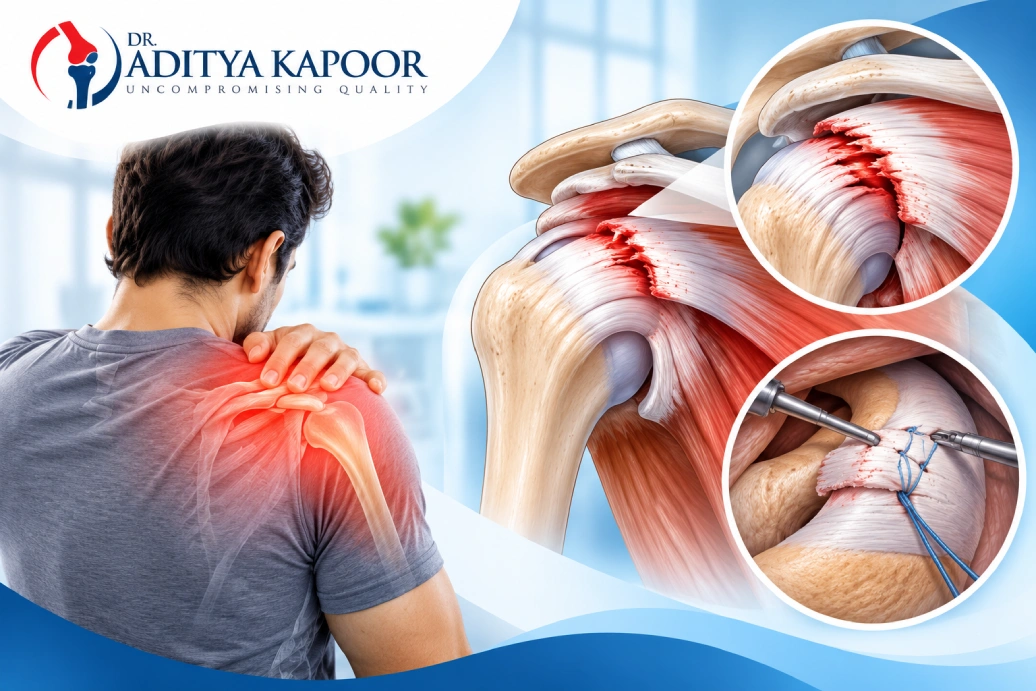
Understanding the rotator cuff, a group of muscles and tendons that help stabilize and move the shoulder.
Persistent Pain
Pain that continues despite appropriate nonsurgical treatment may warrant further evaluation.
Surgical Options
Open, mini-open, and arthroscopic techniques may be considered according to the tear and individual patient needs.
Guided Recovery
Protection of the repair, rehabilitation, and physical therapy are important parts of recovery.
When Is Rotator Cuff Surgery Recommended?
Surgery may be considered when a rotator cuff tear causes ongoing symptoms or significant functional limitations. Your surgeon will assess the tear and determine whether repair is appropriate.
Persistent Pain and Stiffness
Pain, stiffness, or weakness that continues for six to twelve months despite appropriate treatment may prompt consideration of surgery. The duration alone does not determine whether surgery is necessary.
A Larger Rotator Cuff Tear
A tear larger than approximately 3 cm may require surgical assessment, particularly when the surrounding tendon tissue remains suitable for repair.
A Recent Shoulder Injury
An acute injury that causes a rotator cuff tear, especially with sudden weakness or loss of arm function, may require timely specialist evaluation.
Significant Loss of Function
Difficulty lifting the arm, performing everyday activities, or using the shoulder because of weakness may indicate a tear that needs further assessment.
No. Many tears can initially be managed with activity modification, appropriate medication, and physiotherapy. Surgery depends on the type and severity of the tear, your symptoms, your functional needs, and your surgeon's assessment.
What Surgical Repair Options Are Available?
The two main approaches to rotator cuff repair are open repair and arthroscopic repair. Mini-open repair is another option in selected cases. Each technique aims to restore the attachment of the torn tendon to the bone.
The choice depends on the size and location of the tear, tendon and bone quality, shoulder anatomy, and the surgeon's experience with the appropriate technique.
Open Rotator Cuff Repair
Open repair is an established surgical technique in which the surgeon makes an incision to access the torn tendon and repair it to the bone.
How does it work?The surgeon directly accesses the affected shoulder structures and performs the repair. The incision and surgical approach depend on the complexity of the injury.
When may it be considered?- Selected large or complex tears.
- Cases requiring additional procedures, such as a tendon transfer.
- Situations in which direct surgical access is appropriate.
Mini-open repair uses a smaller incision than traditional open repair and may be combined with arthroscopic techniques when appropriate.
Arthroscopic Rotator Cuff Repair
Arthroscopic repair is a minimally invasive procedure that uses a small camera called an arthroscope and specialized surgical instruments.
How does it work?The surgeon makes small incisions to insert the arthroscope and instruments. Images from the camera appear on a monitor, allowing the surgeon to examine the joint and perform the repair.
Potential advantages- Small surgical incisions.
- Detailed visualization of the shoulder joint.
- Less disruption of surrounding tissues in suitable cases.
- The deltoid muscle can generally be preserved.
Not every tear is best treated arthroscopically. The surgeon will recommend a technique based on the injury, tissue quality, and required repair.
What to Expect During Recovery
Recovery begins immediately after surgery. Pain management, protection of the repair, and a carefully planned rehabilitation programme help support the healing process.
Pain Management
Some pain and discomfort are expected after surgery. Your doctor may prescribe medication and recommend other measures to help manage symptoms.
Follow your medical team's instructions about wound care, medication, and protecting your shoulder.
Protecting the Repair
A sling is commonly used to support the arm while the repaired tendon begins to heal.
Depending on the injury and repair, sling use may last approximately four to six weeks or longer. Your surgeon will determine when it is safe to begin moving your arm.
Passive Shoulder Exercises
During passive exercises, a therapist or another trained person supports your arm and gently moves the shoulder without requiring you to actively contract the shoulder muscles.
These exercises may begin during the first four to five weeks in selected cases, but the timing depends on the repair and your surgeon's protocol.
Active Shoulder Exercises
When your surgeon considers it safe, you may progress to active exercises, moving your arm using your own muscles rather than relying on external support.
These exercises help gradually improve movement, coordination, and control. Progression depends on tendon healing and your rehabilitation plan.
Strengthening and Functional Recovery
Strengthening exercises are introduced when appropriate to improve muscle strength, shoulder stability, and functional movement.
Many patients require several months to recover. Returning to heavy lifting, sports, or strenuous work may take longer, depending on the repair.
The stages above are general examples, not a fixed rehabilitation prescription. Do not begin shoulder exercises or change sling use without following the instructions provided by your surgeon and physiotherapist.
Rehabilitation and Physical Therapy
Rehabilitation is an important part of recovery following rotator cuff repair. A structured programme helps restore movement and gradually rebuild strength while protecting the healing tendon.
Protect the Healing Tendon
The repaired tendon needs time to attach and heal. Your care team will explain how to use the sling, which activities to avoid, and how to protect your shoulder.
Avoid lifting, pushing, pulling, or moving the arm beyond the limits set by your rehabilitation programme.
Restore Shoulder Movement
Passive and later active exercises help improve the shoulder's range of motion in a controlled manner.
Your physiotherapist will adjust the exercises according to your progress, symptoms, and surgical restrictions.
Rebuild Strength and Control
Strengthening exercises are gradually introduced when the tendon has healed sufficiently and your surgeon approves the next stage.
The aim is to improve muscle function, shoulder stability, and the ability to perform everyday activities.
Return to Daily Activities
Progressively returning to daily tasks is an important rehabilitation goal. The timing depends on your healing, strength, movement, and type of work.
Returning to sports and heavy physical activity requires additional assessment and clearance from your care team.
What Results Can You Expect?
Many patients experience reduced shoulder pain and improvements in strength and function following rotator cuff repair. However, results vary according to the nature of the tear, tendon quality, healing, and rehabilitation.
Open, mini-open, and arthroscopic repairs can all provide satisfactory results when appropriately selected. The most suitable approach depends on the individual injury and the surgeon's expertise.
- Potential reduction in shoulder pain.
- Improved shoulder strength and movement.
- Better ability to perform everyday activities.
- A structured plan for returning to work and recreational activities.
Every Shoulder Is Different
The success of treatment depends on choosing an appropriate repair technique, protecting the healing tendon, and following a suitable rehabilitation plan.
Your surgeon can explain the likely benefits, limitations, risks, and recovery expectations for your specific condition.
Experiencing Persistent Shoulder Pain or Weakness?
If shoulder pain, weakness, or restricted movement is affecting your daily life, consult an orthopedic specialist for an appropriate assessment and treatment plan.
Book an AppointmentThis article is intended for general educational purposes and does not replace an individual medical assessment. Treatment and recovery recommendations should be provided by your treating orthopedic surgeon.
