
ACL & PCL Reconstruction
Understanding cruciate ligament injuries, their symptoms, when reconstruction may be considered, and how treatment can help restore knee stability.
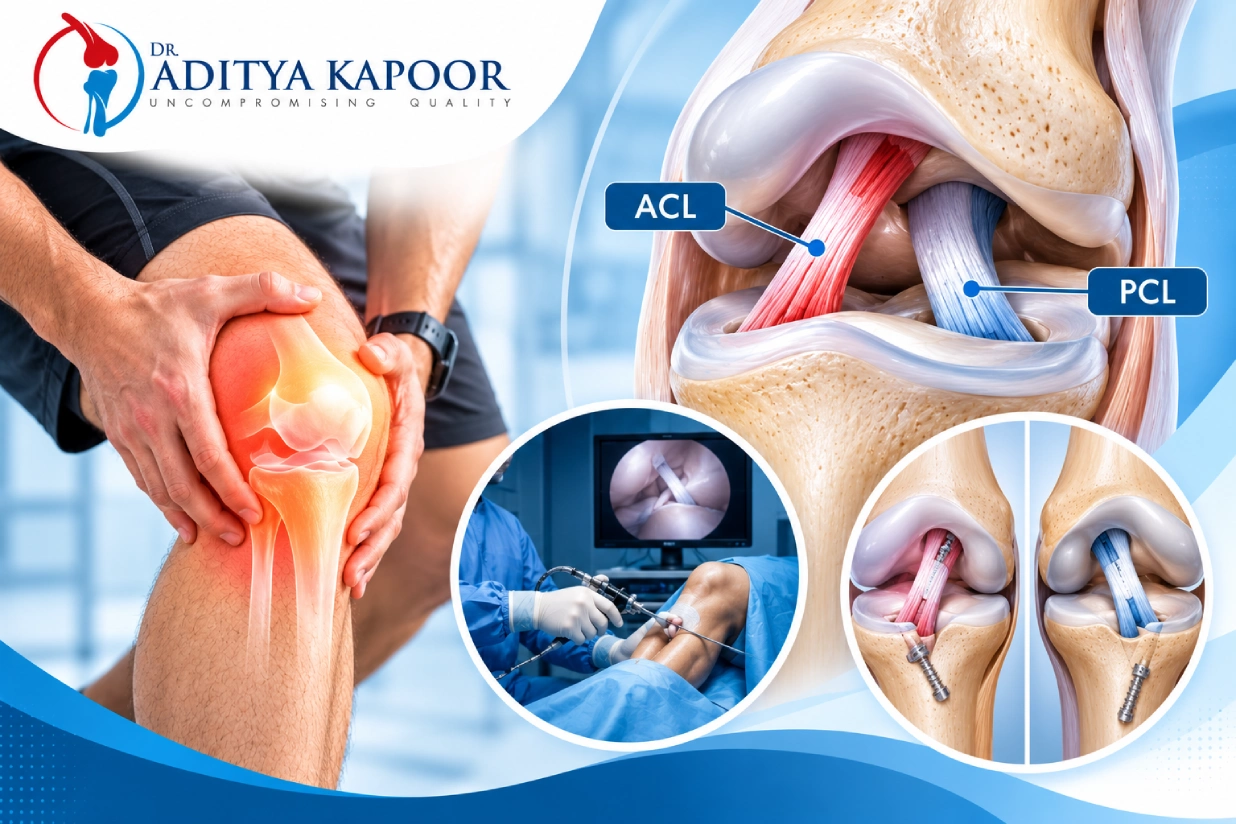
Understanding ACL and PCL Injuries
The anterior cruciate ligament (ACL) and posterior cruciate ligament (PCL) are strong bands of tissue located in the central part of the knee joint. They connect the femur (thighbone) and tibia (shinbone), helping prevent the bones from sliding or pivoting uncontrollably.
A heavy impact or blow to the front or side of the knee can rupture the ACL or PCL. Such injuries may also occur while running and suddenly changing direction.
What Do the ACL and PCL Do?
Both ligaments contribute to knee stability by helping control movement between the femur and tibia.
Anterior Cruciate Ligament (ACL)
The ACL is one of the central knee ligaments. It helps control sliding and rotational movement between the thighbone and shinbone.
Posterior Cruciate Ligament (PCL)
The PCL is another strong ligament within the knee joint. Along with the ACL, it helps maintain stability and control movement between the two bones.
What Are the Signs and Symptoms?
When a cruciate ligament tears, bleeding inside the knee joint can cause pain, swelling and difficulty moving. Other symptoms may persist even after the initial pain subsides.
Deep Knee Pain
A ligament rupture may cause severe pain deep inside the knee joint following an injury.
Rapid Swelling
Bleeding and inflammation inside the joint can cause rapid swelling and make movement difficult.
Knee Instability
The knee may feel as though it is collapsing, buckling or giving way during everyday activities.
Difficulty with Activities
Walking on uneven surfaces, using stairs, running, changing direction or returning to sports may become difficult.
Symptoms may reduce within a few days, but instability can remain. Pain is not always present, even when the knee does not feel reliable during movement.
A meniscal tear may occur alongside an ACL or PCL injury and can also contribute to knee pain. Orthopedic surgeons may treat ligament and meniscal injuries together when clinically appropriate.
Could You Need an ACL/PCL Assessment?
Consider consulting an orthopedic specialist if you experience any of the following after a knee injury:
- A suspected complete ligament rupture following significant trauma.
- A ligament injury accompanied by cartilage or meniscus damage.
- Difficulty walking, climbing stairs, getting out of a chair or moving on uneven ground.
- Your knee repeatedly gives way or feels unstable during activities.
- Difficulty returning to sports that involve running, pivoting or changing direction.
Do You Need Surgery for an ACL/PCL Injury?
Not everyone with a ruptured ACL or PCL needs ligament reconstruction. Treatment depends on the nature of the injury, associated damage and the person's functional requirements.
Non-Surgical Treatment
For some patients with partial ligament tears, non-surgical treatment may help compensate for reduced ligament function.
- Activity modification
- Bracing when recommended
- Physiotherapy
When Reconstruction May Be Considered
Your orthopedic surgeon may consider reconstruction when an injury causes significant instability or affects your ability to perform required activities.
- Complete ligament rupture after severe trauma
- Multiple injuries involving the meniscus or cartilage
- Persistent knee instability or repeated giving way
- Desire to return to high-demand sports and activities
People who wish to return to demanding sports such as soccer, football or skiing should discuss the available treatment options with an orthopedic specialist.
Advantages of ACL/PCL Reconstruction
When reconstruction is appropriate, its intended benefits include improving knee stability and supporting everyday movement and activity.
Supports overall mobility and quality of life.
Aims to restore stability and confidence in the knee.
May help reduce the risk of further joint degeneration and arthritis.
Aims to protect the cartilage and meniscus from further damage associated with instability.
The Bottom Line
ACL and PCL injuries can affect knee stability, walking, everyday movement and participation in sports. Symptoms may include pain, rapid swelling, buckling and a feeling that the knee is giving way.
Not every injury requires surgery. Partial tears may be managed with activity modification, bracing or physiotherapy, while reconstruction may be considered for selected patients with significant instability or high activity demands.
An orthopedic assessment can help determine the extent of the injury and the treatment options suited to your needs.
