
Bankart Repair: Restoring Shoulder Stability and Confidence
Does your shoulder feel as though it might slip out of place when you reach, lift, exercise, or move your arm?
Repeated shoulder dislocations can affect your confidence and make everyday movements uncomfortable. One possible cause is a Bankart lesion, an injury to the labrum that helps stabilize the shoulder joint.
Bankart repair is a surgical procedure designed to reattach the torn labrum and help restore shoulder stability. Understanding the procedure and recovery process can help you discuss suitable treatment options with your orthopedic surgeon.
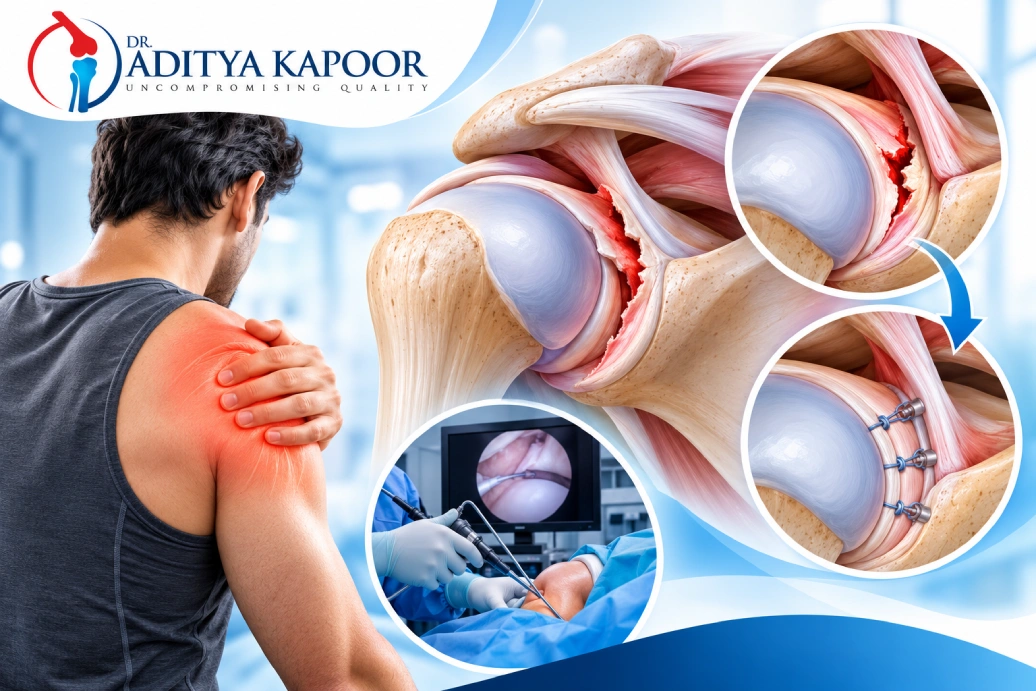
An overview of Bankart repair and its role in treating shoulder instability.
Understand the Injury
Learn how damage to the shoulder labrum can contribute to repeated dislocations and instability.
Explore Surgical Repair
Understand how arthroscopic surgery uses small instruments, anchors, and sutures to repair the torn labrum.
Prepare for Recovery
Discover the general recovery stages, rehabilitation milestones, and factors affecting return to activity.
What Is a Bankart Lesion?
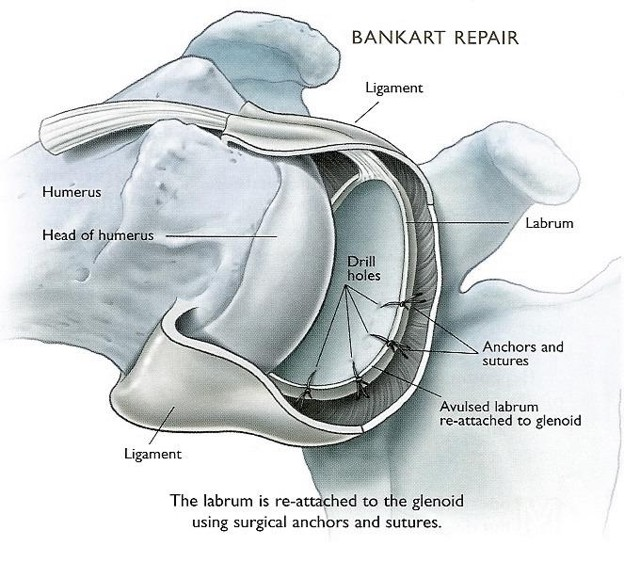
The shoulder is a ball-and-socket joint. The rounded head of the upper arm bone, called the humerus, fits into a shallow socket known as the glenoid.
A ring of strong fibrocartilage called the labrum surrounds the socket. It helps deepen the socket and contributes to shoulder stability.
A Bankart lesion occurs when the front-lower portion of the labrum tears away from the glenoid, usually following a forward dislocation of the shoulder. The supporting ligaments and joint capsule may also be stretched or damaged.
- The labrum helps support the shoulder socket.
- A tear can reduce the joint's natural stability.
- Repeated dislocations may cause further damage to the joint.
Why Is Bankart Repair Needed?
Not everyone who dislocates a shoulder needs surgery. Some patients recover with appropriate immobilization, physiotherapy, and strengthening exercises.
However, surgery may be considered when damage to the labrum contributes to repeated dislocations or persistent shoulder instability.
Five Signs That Bankart Repair May Be Considered
Repeated Shoulder Dislocations
The shoulder slips out of place more than once, sometimes during relatively minor movements or everyday activities.
Persistent Instability
You feel that your shoulder might give way when reaching, lifting, rotating your arm, or performing routine movements.
Difficulty Participating in Sports
Activities such as cricket, badminton, swimming, basketball, or weight training become uncomfortable or unreliable because of shoulder instability.
A Significant Labral Tear
Clinical examination and imaging identify structural damage that contributes to instability of the shoulder joint.
A Higher Risk of Recurrence
Younger athletes, people participating in contact sports, and those with physically demanding occupations may need an assessment of their risk of repeated dislocation.
Why Early Assessment Matters
Repeated dislocations can damage the labrum, cartilage, and bones of the shoulder. Appropriate assessment helps identify these problems and guide treatment.
Does Every Bankart Tear Require Surgery?
No. The decision depends on symptoms, age, activity level, the risk of further dislocations, and the amount of bone damage. Your orthopedic surgeon can help determine whether nonsurgical treatment or surgical stabilization is appropriate.
How Is Bankart Repair Performed?
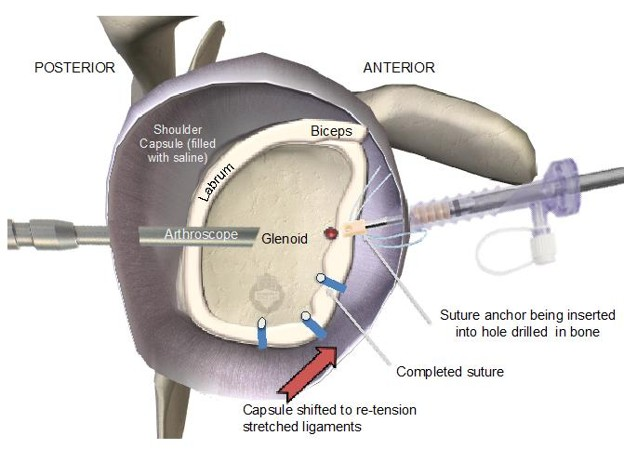
Bankart repair is commonly performed using arthroscopic surgery, a minimally invasive technique that uses a small camera and specialized surgical instruments.
The aim is to reattach the torn labrum to the glenoid and restore tension to the supporting tissues.
Anesthesia and Preparation
The procedure is usually performed under general anesthesia. A regional nerve block may also be used to help manage pain after surgery.
Examining the Shoulder Joint
The surgeon inserts an arthroscope to examine the labrum, cartilage, ligaments, and surrounding structures.
Repairing the Torn Labrum
The torn labrum is prepared for repair. Small suture anchors are placed along the glenoid rim, and sutures secure the labrum and supporting capsule.
Completing the Procedure
The surgeon checks the repair, closes the small incisions, and places the arm in a protective sling.
Many patients return home the same day or after a short hospital stay, depending on their condition and the treating team's recommendations.
Pain Management After Bankart Repair
Some discomfort is expected, particularly during the first few days after surgery. Your care team may recommend a combination of medication, cold therapy, positioning, and appropriate rest to help manage pain.
01 Regional Nerve Block
An anesthesiologist may administer a nerve block to temporarily numb the shoulder and arm. Its effects gradually wear off, so follow your pain-management instructions as sensation returns.
02 Pain-Relieving Medication
Your surgeon may prescribe suitable pain medication and, when appropriate, anti-inflammatory medicines. Follow the prescribed doses and do not combine medicines without medical advice.
03 Ice Therapy
A cold pack wrapped in a protective cloth may help reduce swelling and discomfort. Follow your surgeon's instructions and protect the skin and surgical dressing.
04 Comfortable Sleeping Positions
Sleeping slightly upright and using pillows to support the operated arm may improve comfort during early recovery. Avoid putting pressure directly on the operated shoulder.
05 Supervised Rehabilitation
Approved exercises help restore movement while protecting the repair. Follow your rehabilitation protocol rather than beginning shoulder exercises independently.
06 Follow-Up Appointments
Attend scheduled reviews so your surgeon can assess healing, address concerns, and guide progression through the rehabilitation stages.
When Should You Contact Your Surgeon?
Seek medical advice for increasing or uncontrolled pain, fever, wound discharge, persistent numbness, or unusual swelling. A cold or discolored hand, severe new weakness, or breathing difficulties require urgent medical assessment.
Bankart Repair Recovery Timeline
Recovery is gradual because the repaired labrum needs time to heal securely to the bone. Rehabilitation progresses from protecting the repair to restoring movement, building strength, and returning to more demanding activities.
Protect the Repair
The initial stage focuses on protecting the healing labrum, managing pain, and using the sling as directed.
Hand and elbow movements and carefully supervised shoulder exercises may be introduced according to your surgeon's protocol.
Restore Shoulder Mobility
Shoulder movement is gradually increased as healing allows. Gentle strengthening may be introduced when your surgeon or physiotherapist considers it appropriate.
Build Strength and Endurance
Progressive strengthening and functional exercises help improve shoulder control, endurance, and the ability to perform everyday activities.
Progress depends on healing, strength, range of motion, and clinical assessment.
Return to Demanding Activities
Return to contact sports, heavy lifting, and demanding overhead activities may be considered after appropriate assessment of strength, mobility, and stability.
Clearance depends on your individual progress and the requirements of your activities.
These stages are general examples, not guaranteed deadlines. Rehabilitation should progress according to healing and functional milestones rather than time alone. Follow your surgeon's individual instructions.
When Can You Return to Work and Driving?
The timing depends on the type of activity, your recovery, and the restrictions placed on your shoulder after surgery.
Returning to Work
Desk-based work may be possible within a few weeks if pain is controlled and the arm can remain protected. Manual labour, overhead work, and heavy lifting generally require a longer recovery period and clearance from your surgeon.
Returning to Driving
Resume driving only when your surgeon confirms it is safe, you can control the vehicle reliably, and you are no longer restricted by sling use or medication that may impair driving.
How Successful Is Bankart Repair?
Bankart repair is an established surgical treatment for recurrent anterior shoulder instability. In appropriately selected patients, it can improve shoulder stability, function, and confidence during movement.
However, not every patient returns to their previous sporting level, and recurrent instability remains possible. Outcomes depend on several individual factors.
- Age and activity level.
- Number of previous dislocations.
- Amount of glenoid bone loss.
- Presence of a Hill-Sachs lesion.
- Adherence to rehabilitation guidance.
Stability Is the Goal
The goal of Bankart repair is to restore the supporting structures of the shoulder and reduce the risk of further dislocation.
Bone loss, associated injuries, and the pattern of instability can affect which operation is most appropriate.
Your surgeon can explain the expected benefits, potential limitations, and risk of recurrence for your specific condition.
What Are the Possible Complications?
Although Bankart repair is an established procedure, as with any surgery, it carries potential risks. Your surgeon will explain which risks are relevant to your condition.
Infection and Bleeding
Surgical procedures carry a risk of infection, bleeding, and wound healing problems.
Stiffness and Reduced Movement
Some patients develop shoulder stiffness or reduced external rotation during recovery.
Nerve Injury
Nerve irritation or injury is a potential complication of shoulder surgery.
Persistent Pain
Pain or discomfort may continue during recovery or persist longer than expected.
Repair Failure
The repaired tissue may fail to heal as expected or may be damaged during recovery.
Recurrent Dislocation
Shoulder instability can return despite surgery, particularly when important risk factors remain.
Appropriate surgical planning, follow-up, and adherence to rehabilitation restrictions help support recovery. Contact your treating team if you develop concerning symptoms or have questions about your progress.
Experiencing Repeated Shoulder Dislocations or a Feeling of Instability?
A shoulder that repeatedly slips out of place should not be ignored. An orthopedic assessment can help identify the cause of instability and determine whether nonsurgical treatment or surgical stabilization is appropriate.
Book an AppointmentThis page provides general educational information and does not replace a medical consultation. Treatment decisions and rehabilitation plans should be individualized by your treating orthopedic surgeon.
