
Meniscal Repair Surgery
Understanding meniscus tears, when repair may be suitable, how the procedure works, and why preserving meniscal tissue can matter for long-term knee health.
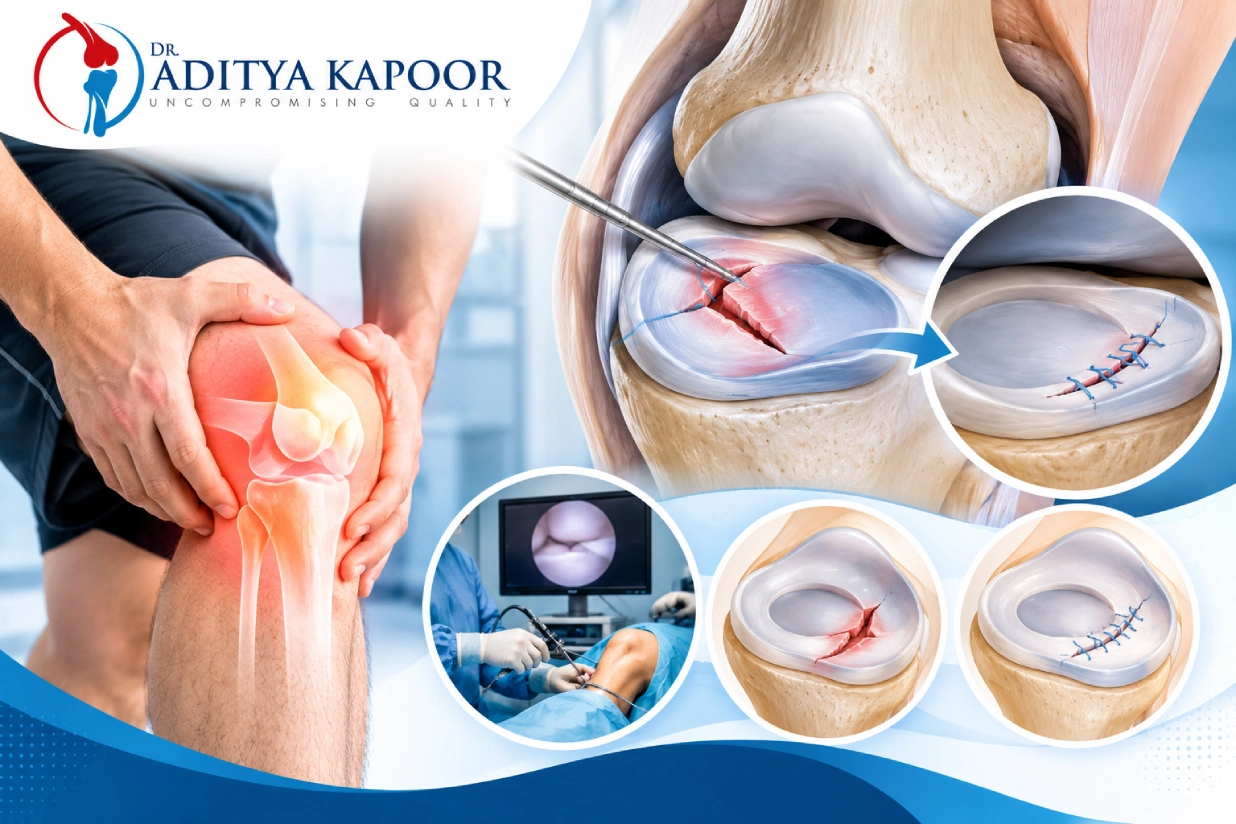
What Is the Meniscus?
The meniscus is a C-shaped, wedge-like structure made of cartilage that sits between the tibia (shinbone) and femur (thighbone). Each knee has two menisci: one on the inner (medial) side and another on the outer (lateral) side.
The meniscus acts as a cushion, absorbing shock and helping distribute stress across the knee joint. Twisting or rotating the knee, especially while bearing full body weight, can cause a tear.
Some tears heal without surgery. However, because parts of the meniscus have limited blood supply, certain tears may not heal adequately and can cause catching, locking or reduced range of motion.
Functions of the Meniscus
Healthy meniscal tissue contributes to several important functions within the knee.
Shock Absorption
Cushions the knee and helps absorb forces during everyday movement and physical activity.
Force Distribution
Helps spread stress across the joint during weight-bearing activities.
Joint Stability
Acts as a secondary stabilizer and contributes to controlled knee movement.
Joint Protection
Facilitates smooth joint gliding and helps protect the joint surfaces and margins.
When Do You Need Meniscal Repair Surgery?
Whether a meniscus tear can be repaired depends on its pattern, location, blood supply, age and activity level, and the overall condition of the knee.
When repair may be considered
- The tear is vertical or longitudinal and lies near the outer rim of the meniscus.
- You are younger and physically active, particularly if ACL reconstruction is also planned.
- The tear is relatively recent rather than a long-standing degenerative tear.
- The tear lies in a region with sufficient blood supply to support healing.
If a tear is unlikely to heal after repair, meniscectomy (removal of the damaged portion) may be a more appropriate option. The decision depends on the tear and the individual's circumstances.
Why the Location of the Tear Matters
The meniscus is divided into three zones according to their blood supply. This is a major factor in determining whether a tear may heal after repair.
Red-Red Zone
The outer rim has a relatively good blood supply. Tears in this region generally have better healing potential.
Red-White Zone
This region has a moderate blood supply. Healing may be possible but is less predictable.
White-White Zone
The central region has little to no blood supply. Tears here have limited healing potential and may be treated differently.
Meniscal repair and meniscectomy are different treatment options matched to the characteristics of a tear. The location and healing potential of the damaged tissue are important considerations.
What Does Meniscal Repair Surgery Involve?
Meniscal repair is generally performed arthroscopically, using a small camera and specialized instruments inserted through small incisions.
The surgeon examines the knee and confirms whether the tear is suitable for repair.
If the tissue is repairable, the surgeon stitches the torn edges together using an appropriate surgical technique.
A structured rehabilitation plan helps protect the repair while gradually restoring movement and strength.
Common Surgical Techniques
Inside-Out Repair
Sutures are passed from inside the joint through small external incisions. This is an established technique for suitable tears.
All-Inside Repair
Specialized devices allow repair from within the joint, often without separate external incisions.
Outside-In Repair
Sutures are passed from outside the joint inward. This technique may be used for selected tears toward the front of the knee.
Procedure Duration
The source document describes surgery as taking approximately one hour, with many patients going home the same day. Actual arrangements vary.
A Longer Road Back: Recovery After Repair
Recovery after meniscal repair is generally longer than after trimming the damaged portion. The repaired tissue needs time to heal, and rehabilitation must protect it while restoring knee function.
After Meniscectomy
Weight-bearing and walking may resume earlier in suitable patients. The source document describes recovery of around six weeks, although timelines vary.
After Meniscal Repair
The repair needs time to heal internally. Protected movement and rehabilitation may continue for several months, depending on the tear and the surgeon's protocol.
Typical Rehabilitation Stages
Focus on controlling swelling, restoring permitted range of motion and activating the quadriceps.
Progress movement, strength and walking according to the treating team's instructions.
Dynamic movement and sport-specific training may be introduced later when the repair has healed sufficiently and the surgeon or physiotherapist considers it appropriate.
Return to work, driving, sports and unrestricted movement depends on the type of tear, the repair performed and your progress. Follow the specific weight-bearing, brace and rehabilitation instructions provided by your surgeon.
Why Surgeons Consider Preserving the Meniscus
Removing meniscal tissue can increase stress across the knee joint over time. When a tear is repairable, preserving the tissue may be an important consideration for long-term joint health.
Preserve Natural Tissue
Repair aims to retain the meniscus rather than remove the damaged portion.
Support Joint Function
Preserving meniscal tissue helps maintain its role in shock absorption and force distribution.
The source document reports success rates of 85–90% for selected repair cases and around 91% when performed alongside ACL reconstruction. Outcomes vary with tear characteristics and patient factors. Potential surgical risks include infection, blood clots, nerve or blood vessel injury, and stiffness.
The Bottom Line
Meniscal repair aims to preserve the cushioning cartilage within the knee. Whether repair is suitable depends largely on the location and pattern of the tear, its blood supply and the likelihood of healing.
Repair often requires a longer rehabilitation period than meniscectomy, but preserving repairable tissue may offer long-term advantages. Your orthopedic surgeon can explain which option is appropriate for your individual injury.
Is my tear located in a region that can heal, and if both repair and meniscectomy are reasonable options, what are the likely benefits and trade-offs in my case?
