
Revision Knee Replacement
What to Expect When a Knee Implant Needs Replacement
A total knee replacement is the most successful orthopedic procedure in the world. It helps reduce chronic knee pain and improve quality of life and activity levels. The implant can last for many years, or even decades, with reliable knee function.
However, knee replacement may fail for a variety of reasons. When this happens, the knee becomes painful and swollen. Walking in these circumstances can become unstable and difficult due to stiffness in the knee joint. A person with a failed knee surgery can find it difficult to perform routine activities.
An orthopedic surgeon may recommend a second surgery – a revision total knee replacement.
A revision knee replacement is a more complex and different surgery than the original surgery.
If your orthopedic surgeon recommends revision surgery, try to discuss with the surgeon the actual reason for the knee replacement failure.
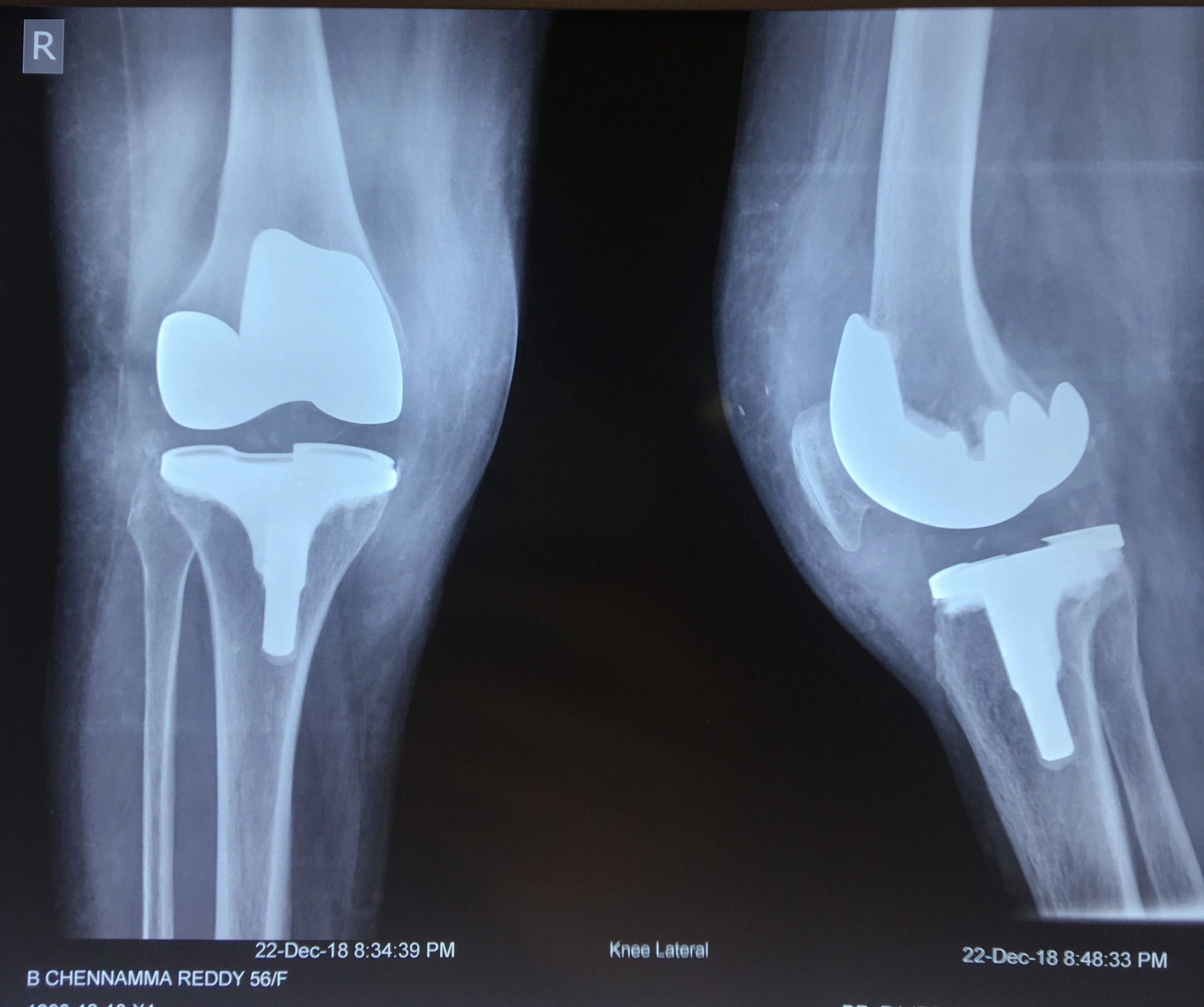
Let us have a quick self-check:
- Have you ever had a prior knee surgery?
- Do you have pain, swelling, warmth, or fever – this could suggest an infection.
- Did your orthopedic surgeon identify any cause – such as instability, loosening, infection or breakdown in the implant’s components?
- Has your knee become progressively more painful, unstable, or stiff months or years after your original replacement?
If your answer corresponds to a specific cause, then your surgeon may adopt an appropriate procedure to address the issue. It will help with expected recovery time and realistic outcomes.
The aim of a total knee replacement surgery is to relieve pain and improve mobility and knee function.
Remember!A revision knee replacement is different from the primary knee replacement. It is a complex, lengthy procedure that requires extensive planning and specialized implants to achieve excellent results.
Why Knee Replacements Fail
Revision becomes necessary for a range of distinct reasons, each with its own treatment path and outlook:
Occurring either shortly after the original surgery or, less commonly, years later when an infection elsewhere in the body spreads to the knee through the bloodstream. Clinical research on midterm revision outcomes has identified periprosthetic infection as the single most common cause of failure for both primary and revision implants.
The implant gradually separates from the bone without infection being involved, often due to wear particles triggering bone resorption (osteolysis) over time.
The knee doesn't feel structurally secure during normal movement, often related to ligament laxity or a mismatch in how the components were originally positioned.
The polyethylene component between the metal parts gradually wears down with years of use.
Reduced range of motion from scar tissue, or a fracture around the implant, can also necessitate revision.
Patients who receive their original knee replacement at a younger age face a genuinely higher long-term likelihood of needing revision — simply because they may "outlive" the expected functional lifespan of the implant, placing more cumulative stress on it over more active years.
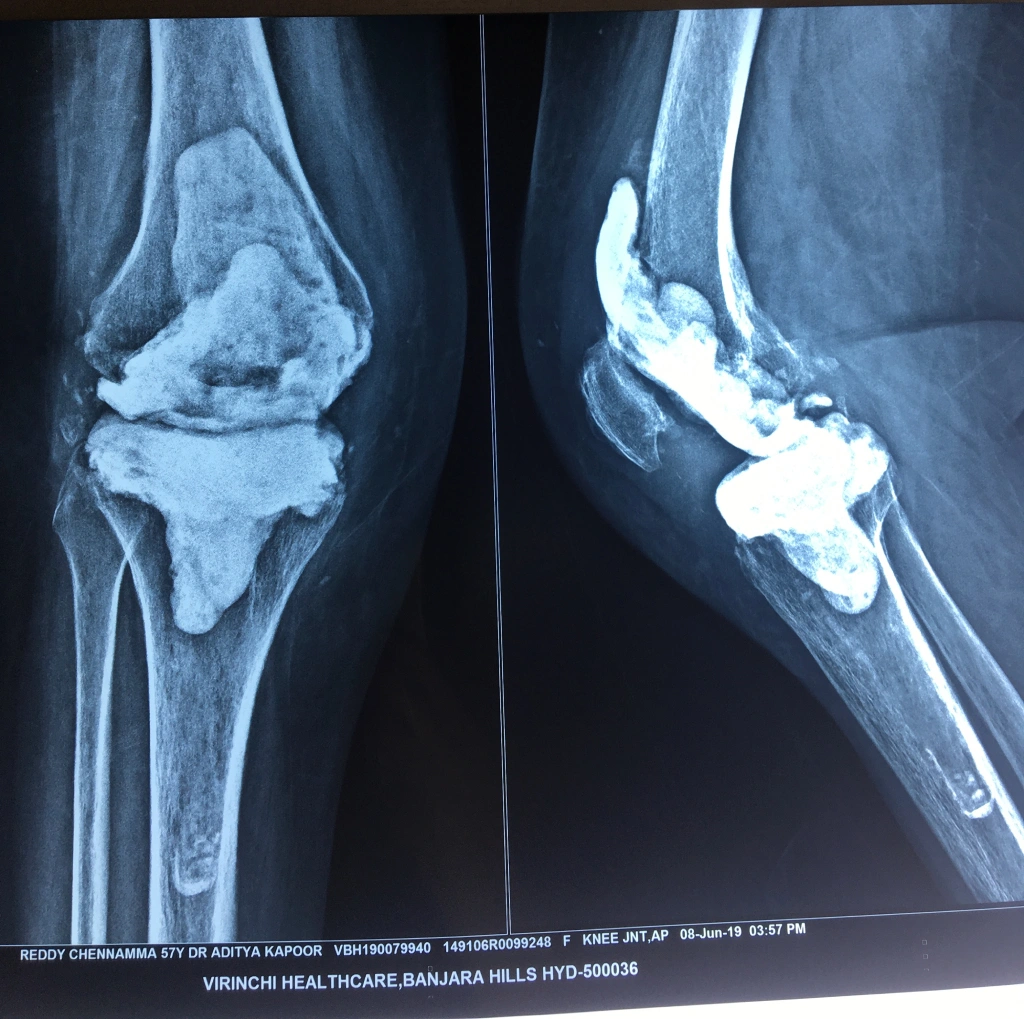
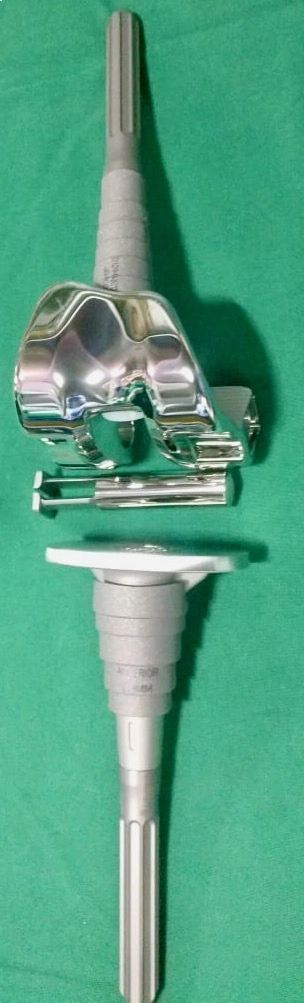
A Revision Knee Replacement is Different from Your First Knee Replacement
Reflect for a moment
Many people have the same expectation out of a revision knee replacement as the primary knee replacement. But a revision knee replacement is structurally a different surgery – it is simply not a repeat of the first procedure.
Revision Knee Replacement
Revision surgery is technically more demanding: surgeons often contend with scar tissue, ligament laxity, and diminished bone stock left behind by the original implant. Recent large-scale data comparing revision to primary knee replacement found significantly higher complication rates, costs, and hospital stays for the revision procedure.
Recovery
Recovery is correspondingly slower and more cautious. Outcomes are frequently less predictable than after a first knee replacement, with a meaningful share of patients still experiencing significant chronic pain or limited mobility afterward.
Setting Realistic Expectations
Patients undergoing a revision knee replacement should see the possible outcomes with a clear eye. Many patients see significant improvement in pain and knee function following a knee revision.
Some patients, in very rare cases, may experience lingering pain for years even with a technically successful revision knee replacement.
Recovery rates may differ in infection-related revisions, depending on the type of infection, infecting organisms, how long the infection went untreated, and the extent of damage caused to surrounding bone and tissues.
What Patients Themselves Say Matters Most
The most critical aspect of a revision knee surgery is the expectation of the patients to return to independence and pre-surgery activities quickly.
This factor is valued above everything else by many while considering a revision knee replacement. However, meeting patients' actual goals and successful revision knee replacement are not identical measures.
What Recovery and Outcomes Look Like
The long-term recovery is promising based on genuine data. According to a study following different revision knee replacements, the overall 10-year survival of the implants was above 90%.
Range of motion and functional outcomes improved regardless of the type of implant used.
However, recovery time is gradual and typically longer than the primary knee replacement.
Diet, physical therapy, and regular follow-up with the knee surgeon can help in regaining strength, stability, mobility, and confidence.
The Bottom Line
A revision knee replacement is different from the primary knee replacement. It is a more extensive and complex procedure that requires diligent planning and pre-surgical workups.
It can help restore primary knee function, reduce pain, and improve mobility.
However, the outcome depends on the specific cause of failure, proper planning, and the surgical dexterity of the surgeon.
Based on the specific reason my implant is failing, what outcome range should I genuinely expect — and how does that compare to my original knee replacement recovery?
