
Joint Injections for Arthritis: Procedure, Pain Management, Recovery, and Expected Outcomes
Are painful, stiff joints making it difficult to walk, climb stairs, or enjoy everyday activities? Joint injections may provide targeted relief for certain types of arthritis when other treatments are not enough.
While exercise, weight management, medications, and physiotherapy remain important treatments, some patients may benefit from injections that deliver medication directly into or around the affected joint.
Explore Treatment Options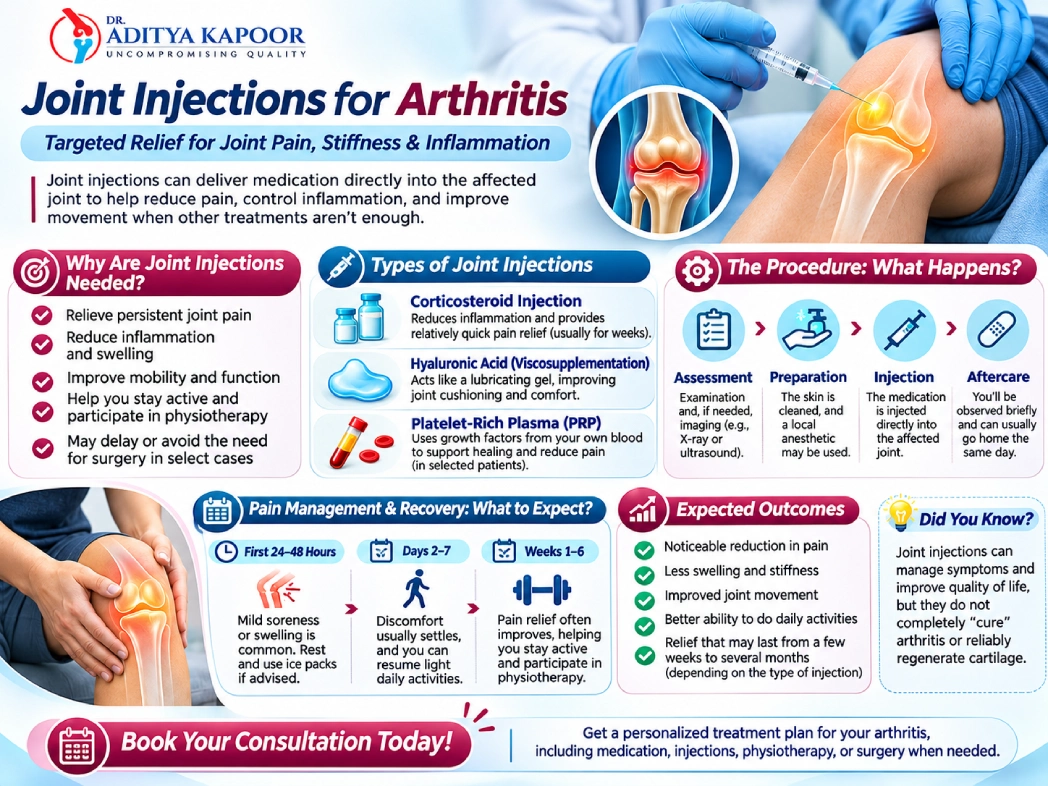
1. What Are Joint Injections for Arthritis?
Joint injections are medical procedures in which a doctor delivers medication or another therapeutic substance into a joint. They are commonly used for selected patients experiencing pain and inflammation associated with arthritis.
The knee is one of the most frequently treated joints, although injections may also be used in the hip, shoulder, ankle, and other joints.
Depending on the type of injection, treatment may help control inflammation, improve joint comfort, or provide temporary symptom relief.
Joint injections are usually part of a broader treatment plan that includes exercise, rehabilitation, and appropriate medical care.
2. Why Are Joint Injections Needed?
Does every patient with arthritis need an injection? No. Many people manage arthritis successfully through strengthening exercises, physical activity, weight management when appropriate, and prescribed medications.
However, injections may be considered when pain continues to interfere with daily activities.
Persistent Joint Pain
When arthritis causes ongoing discomfort despite appropriate nonsurgical treatment, an injection may provide additional relief.
Inflammation and Swelling
Certain injections can reduce inflammation associated with painful arthritis flare-ups.
Difficulty Walking or Exercising
Reducing pain may help patients participate more comfortably in physiotherapy and strengthening exercises.
Temporary Symptom Management
Some patients need short-term relief while preparing for rehabilitation, travel, or another treatment.
When Certain Medicines Are Unsuitable
In selected cases, an injection may be considered when oral medicines are poorly tolerated or inappropriate.
3. What Types of Joint Injections Are Available?
Not all arthritis injections work in the same way. Understanding the differences helps patients make informed decisions.
1. Corticosteroid Injections
Corticosteroids are anti-inflammatory medicines that can be injected into an affected joint. They may provide relatively rapid relief, particularly when inflammation contributes to pain.
Potential benefit: Short-term reduction in pain and swelling.
Limitation: Relief is temporary, and repeated injections may have adverse effects, including possible cartilage damage.
For knee osteoarthritis, corticosteroid injections are supported as an option for short-term symptom relief.
2. Hyaluronic Acid Injections
Hyaluronic acid is a substance naturally present in joint fluid. These injections, sometimes called viscosupplementation, aim to improve lubrication and joint comfort.
Potential benefit: Some patients report temporary improvement.
Limitation: High-quality evidence does not consistently show a clinically meaningful benefit for knee osteoarthritis. Major guidelines do not recommend routine use.
3. Platelet-Rich Plasma (PRP) Injections
PRP is prepared using a sample of the patient's blood. The blood is processed to concentrate platelets, which contain biological factors involved in tissue responses. PRP is then injected into the affected joint.
Potential benefit: Some studies report improvements in knee osteoarthritis symptoms.
Limitation: Preparation methods vary considerably, study results are inconsistent, and long-term effectiveness remains uncertain.
4. Other Biological Injections
Treatments involving bone marrow-derived products or other cellular preparations are sometimes marketed for arthritis.
However, many remain investigational, and their safety, effectiveness, and regulatory status vary.
4. Who May Benefit from Joint Injections?
Joint injections may be considered for patients with:
- Symptomatic knee osteoarthritis.
- Painful inflammatory episodes.
- Persistent discomfort despite appropriate rehabilitation.
- Difficulty participating in exercise because of pain.
- Specific joint conditions requiring targeted anti-inflammatory treatment.
The decision depends on the type of arthritis, severity of joint damage, overall health, and treatment goals.
Who may need additional precautions?
Patients with suspected joint infection, certain bleeding disorders, uncontrolled medical conditions, or allergies to injection components require careful assessment.
- People with diabetes should be aware that corticosteroid injections can temporarily increase blood glucose levels.
- Patients taking blood-thinning medication should inform their doctor before treatment.
5. How Is a Joint Injection Performed?
Most routine joint injections are outpatient procedures. The exact technique depends on the joint and medication used.
Clinical Evaluation
The orthopedic specialist examines the affected joint and reviews the patient's symptoms, medical history, and previous treatment. X-rays or other investigations may be recommended.
Preparing the Injection Site
The skin over the joint is cleaned using an antiseptic solution. The doctor identifies the appropriate injection location.
Local Anaesthesia
A local anaesthetic may be used to reduce discomfort. Some injection preparations already contain an anaesthetic.
Positioning the Needle
A sterile needle is carefully introduced into the joint. For deeper joints, particularly the hip, ultrasound or X-ray guidance may be used to improve placement accuracy.
Delivering the Medication
The selected medication is injected into the joint. If substantial fluid is present, the doctor may first remove some fluid using a procedure called joint aspiration.
Completing the Procedure
The needle is removed, and a small dressing is applied. The patient may be observed briefly before returning home.
6. Is a Joint Injection Painful?
Most patients experience only brief discomfort during the injection. You may feel a small pinch as the needle enters the skin, followed by temporary pressure or fullness inside the joint. Some people experience mild soreness for a day or two afterward.
How is pain managed?
Cold Therapy
Apply a wrapped ice pack for 10–15 minutes at a time if recommended.
Activity Modification
Avoid strenuous activity involving the treated joint for approximately 24–48 hours or as instructed.
Prescribed Medication
Use suitable pain relief only as advised by your doctor.
Gentle Movement
Light walking and routine movement may be permitted, depending on the joint and injection type.
7. Recovery After Joint Injections
Recovery is generally quicker than after orthopedic surgery. However, the response depends on the injection type and the patient's underlying condition.
8. Expected Outcomes of Joint Injections
For appropriately selected patients, joint injections may provide:
- Temporary reduction in pain.
- Reduced inflammation.
- Improved comfort during movement.
- Better participation in physiotherapy.
- Improved ability to perform daily activities.
How successful are joint injections?
Success depends on the medication used, type of arthritis, severity of joint damage, and individual response.
Corticosteroid injections have the clearest role in providing short-term relief for knee osteoarthritis. Evidence for hyaluronic acid and PRP is more variable, and recommendations differ between professional organizations.
Can injections prevent knee replacement?
9. Risks and Possible Side Effects
Although generally well tolerated when performed appropriately, joint injections carry risks. Possible complications include:
- Temporary pain or swelling.
- Bleeding or bruising.
- Infection, including septic arthritis.
- Allergic reactions.
- Temporary blood sugar elevation after corticosteroids.
- Skin discoloration or thinning near the injection site.
- Potential cartilage-related adverse effects from repeated corticosteroid injections.
The frequency and timing of repeat injections should be determined by the treating specialist.
10. Frequently Asked Questions
Which injection is best for knee arthritis?
There is no single best injection for everyone. The choice depends on symptoms, medical history, arthritis severity, and available evidence.
Are joint injections better than surgery?
They serve different purposes. Injections provide symptom relief, while surgery may be necessary for advanced structural joint damage.
Can injections regenerate cartilage?
No commonly used arthritis injection has been reliably proven to regenerate normal cartilage.
How many injections can I receive?
The appropriate number and interval depend on the injection type, joint condition, and individual risk factors.
Can I walk after a knee injection?
Most patients can walk afterward, although strenuous exercise may need to be avoided temporarily.
Are injections safe for diabetic patients?
They may be appropriate, but corticosteroids can temporarily raise blood glucose. Monitoring and individualized medical advice are important.
Expert Arthritis & Joint Pain Management in Hyderabad
Are you struggling with persistent knee pain, joint stiffness, swelling, or difficulty walking?
Consult Dr. Aditya Kapoor — Orthopaedic Surgeon, Joint Replacement, Arthroscopy & Sports Medicine Specialist in Hyderabad — for a comprehensive evaluation of arthritis and personalized treatment options.
Treatment recommendations may include physiotherapy, medications, appropriate joint injections, joint-preserving procedures, or joint replacement when clinically necessary.
Book Your Consultation