
Reverse Shoulder Replacement – Who Needs It & Why?
The upper arm bone (humerus) and the scapula (the shoulder blade) form the shoulder joint. The head of the humerus (the rounded end of the humerus) moves inside a shallow socket in the shoulder blade.
The shoulder's ball-and-socket joint allows a wide range of motion. Ligaments, tendons, and cartilage around the joint provide support and help move the shoulder joint smoothly.
Standard Shoulder Replacement
In a typical standard shoulder surgery, the damaged ball of the humerus bone is removed. A new metal ball is attached in its place to the upper part of the humerus.
A new plastic socket is fixed to the shoulder blade. This type of artificial joint anatomy closely resembles a person’s real anatomy.
Reverse Shoulder Replacement
In a reverse shoulder replacement, the ball and the socket’s locations are reversed.
The ball is placed on the socket side of the joint, and the socket is placed on the arm side (ball side).
A metal stem is inserted in the arm bone (the humerus) to support the socket.
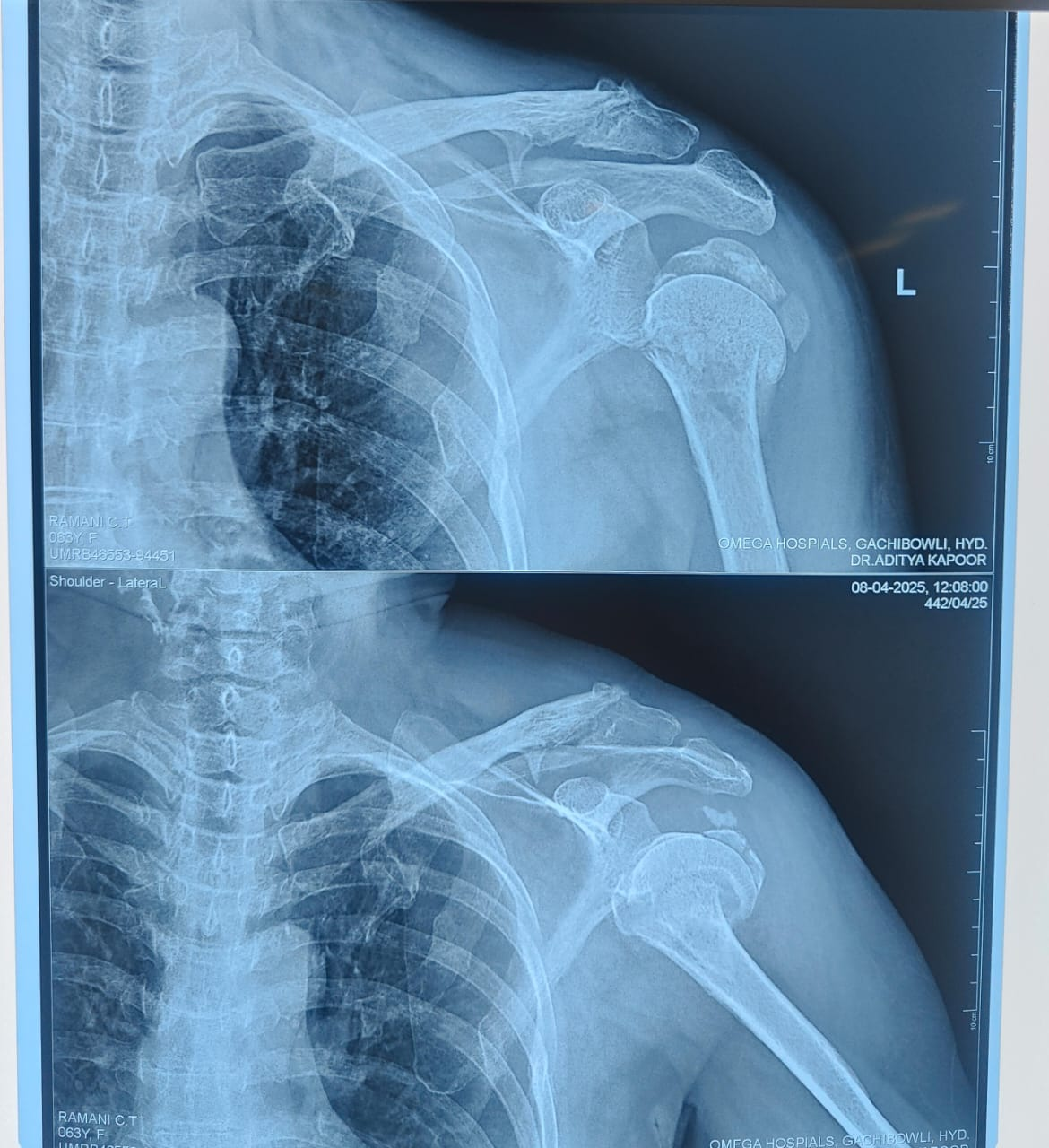
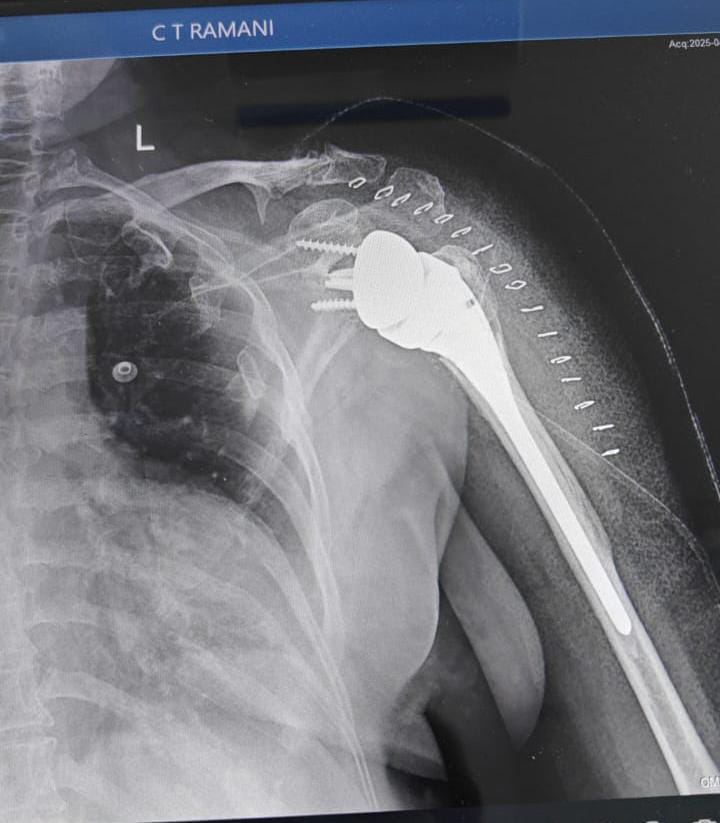
Why Do You Need a Reverse Shoulder Replacement?
Specialists recommend reverse shoulder replacement when you have shoulder pain that hampers your day-to-day activities.
You may require reverse shoulder replacement if you have restricted mobility in your shoulder joint, feel weakness in your arm, or cannot move your shoulder fully.
When other alternative treatments, medications, injections, steroids, and physical therapy fail to manage symptoms, doctors may advise reverse shoulder.
When the Rotator Cuff Is Torn
A reverse shoulder replacement is advised when you have torn rotator cuff muscles.
A typical standard shoulder replacement relies on the support of muscles and tendons surrounding the shoulder joint. This is possible when they are intact.
However, in cases where the rotator cuff is torn or malfunctioning, a reverse implant is designed to provide strength and support.
A standard shoulder replacement with a rotator cuff injury can still limit movement and doesn’t completely relieve pain. A reverse shoulder can address this shortcoming by overcoming these problems.
Which Conditions Warrant Reverse Shoulder Replacement?
The following conditions mostly warrant reverse shoulder replacement:
Arthritis of the Shoulder Joint
It can lead to rotator cuff tendon damage.
Rotator Cuff Tears
Rotator cuff tears can lead to weakness in the shoulder joint. Though the condition is not very painful, it can render a person unable to lift the arm.
Previous Shoulder Replacement
If it has not offered any relief from lingering symptoms such as pain, loss of motion, and weakness in the arm.
Shoulder Fractures
For some fractures of the shoulder, a reverse shoulder is recommended.
Proximal Humerus Tumors
A reverse prosthesis may be necessary due to a tumor in the proximal humerus.
Reverse Shoulder Replacement – Frequently Asked Questions
What Are the Limitations After Reverse Shoulder Replacement?
The range of motion may not be the same as before because the implant relies more on the deltoid muscle rather than the rotator cuff.
Heavy lifting is not allowed because it can put stress on the implant and lead to faster wear.
The goal of reverse shoulder surgery is mostly to reduce pain and improve basic arm use, not necessarily to return to full athletic ability.
What Is the Normal Range of Motion After Reverse Shoulder?
The normal range of motion after a reverse shoulder is typically more limited than a natural shoulder.
Reaching behind the back and certain complex routine tasks can remain challenging.
What Motions Should Be Avoided After Reverse Shoulder?
Combined extension, adduction, and internal rotation should be avoided because this combination can lead to dislocation of the implant.
What Is the Pain Like After Reverse Shoulder Replacement?
The pain following surgery is usually moderate and drops gradually within the first two to three weeks.
What Is Deltoid Muscle Pain After a Reverse Shoulder Replacement?
The deltoid muscle takes the complete job of lifting and stabilizing the arm. For this reason, it becomes stressed and sore.
Stretching and mechanical tension can put additional stress on this muscle and eventually lead to pain.
Medication, physiotherapy, rest, and medical support can help relieve pain.
Reverse Shoulder Replacement for the Right Patient
Reverse shoulder replacement is designed for situations where conventional shoulder replacement may not provide the desired support, particularly when the rotator cuff is torn or malfunctioning.
A detailed assessment of the shoulder joint, surrounding muscles, tendons, and overall condition can help determine whether a reverse shoulder replacement is appropriate.
