
Shoulder Hemiarthroplasty – The Partial Option
A shoulder hemiarthroplasty is a procedure in which the humeral articular surface is replaced with a stemmed humeral component.
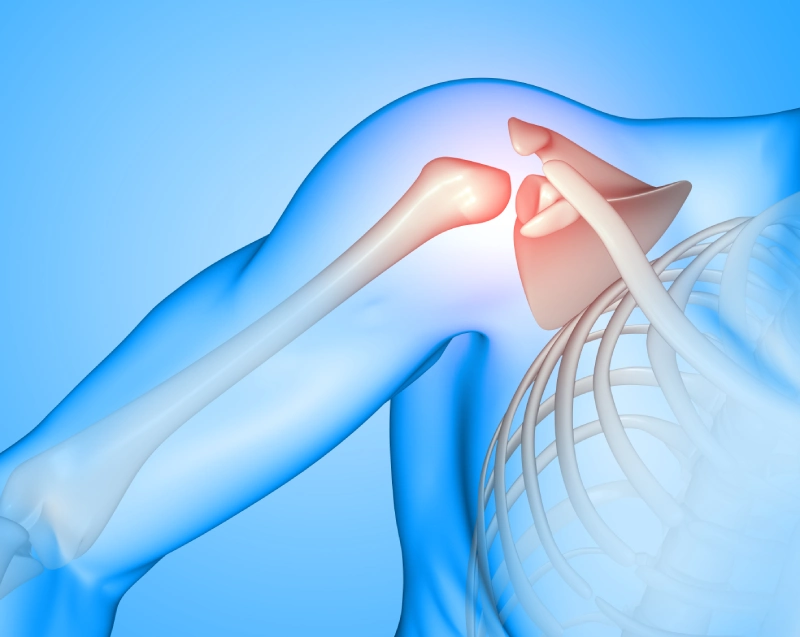
A shoulder hemiarthroplasty is a partial shoulder replacement surgery. In this procedure, only the ball part of the humerus is removed and replaced with a metal ball and stem. The glenoid (shoulder socket) remains intact.
This procedure has its own benefits compared with total or reverse shoulder replacement.
The Implant (Prosthesis)
Shoulder hemiarthroplasty requires meticulous surgical technique to fix the implant.
The implant used in this procedure does not have a glenoid component. It consists of a stem and a metal head.
The head, neck, and stem parts are customizable.
When Is Shoulder Hemiarthroplasty Recommended?
Orthopedic surgeons recommend shoulder hemiarthroplasty for patients with advanced bone disease affecting the humeral end of the joint.
Osteoarthritis, osteonecrosis of the humeral head (glenohumeral arthritis), and complex proximal humeral fractures warrant shoulder hemiarthroplasty.
A Common Indication
The most common indication for shoulder hemiarthroplasty is glenohumeral arthritis when glenoid bone stock is inadequate for total shoulder replacement.
When Is It Contraindicated?
Shoulder hemiarthroplasty is contraindicated in these conditions:
Mucoid degeneration of the rotator cuff
High-grade rotator cuff tears
Coracoacromial ligament deficiency
Shoulder Hemiarthroplasty Is for Whom?
Nearly every comparative study has reached the same underlying conclusion — hemiarthroplasty isn't wrong for the right patient, but "right patient" has become a considerably narrower group than it once was.
That's a genuinely useful frame to bring into your own consultation.
Are You the Right Candidate for Shoulder Hemiarthroplasty?
Quick self-check: You are a candidate for shoulder hemiarthroplasty if your case fits the following aspects:
You have an acute, complex proximal humerus fracture.
You are a young and active person with good bone quality around the tendons.
You have shoulder arthritis in the humeral ball side, leaving the glenoid socket intact (well-preserved socket).
You have less demand with reduced functional requirement – lower physical activity levels that can be fulfilled by a minimally invasive surgery.
Your surgeon has discussed hemiarthroplasty as one option apart from total or reverse shoulder replacement.
Advantages of Shoulder Hemiarthroplasty
Shorter operative time
Less blood loss
Shorter hospital stays
Faster recovery time
No post-surgical complications
Less post-surgical infections
Higher 10-year implant survival rates
For patients with limited physiologic reserve, minimal glenoid wear, or lower functional demands, shoulder hemiarthroplasty is a genuinely reasonable option — the research explicitly frames this as a matter of individualized selection based on the patient’s condition.
Outcomes (Results)
Research studies reported improved joint function and a reduction in pain following the post-surgical recovery period.
Many patients reported markedly improved shoulder function with a standard shoulder hemiarthroplasty.
However, recent advancements in surgical techniques, imaging, and the use of cutting-edge components are making way for improved outcomes.
Innovations in Shoulder Hemiarthroplasty
Innovations are aiming at augmenting implant longevity, improving function, and reducing the likelihood of complications.
Pyrocarbon Head Components
Recent advancements have led to the use of a pyrocarbon head component rather than a titanium or cobalt-chrome head.
This implant is several times smoother and self-lubricating.
It is much closer to the bone compared to a cobalt-chrome metal head. It provides a smooth range of motion with excellent longevity.
Setting Realistic Expectations
Recovery from hemiarthroplasty generally follows a similar early timeline to other shoulder replacement procedures — initial focus on pain control and protecting the repair, followed by a structured physical therapy progression to regain motion and strength.
Because outcomes depend heavily on factors like tuberosity healing (for fractures) and rotator cuff integrity, the rehabilitation plan and its pace are often more individualized than for total or reverse shoulder replacement.
Shoulder Hemiarthroplasty – The Right Option for the Right Patient
Shoulder hemiarthroplasty remains a legitimate, evidence-backed option — but current research is clear that it now serves a narrower, more specific role than it once did.
This is particularly relevant for younger patients with well-preserved anatomy or those where a shorter, less invasive surgery is genuinely the higher priority.
